


.jpg)
Wall Flora, Between Stone and Crevice
18/05/2026
Wall flowers have something magical about them. They grow in extreme conditions, with barely any soil, sometimes only a little lime-rich mortar, in places that are either damp and shaded or scorching hot and dry. With their roots, they manage to cling to the tiniest cracks, where they face little competition from other plants. They are remarkably resilient species.
Wall flora is selective. Young concrete walls host very few species, while natural stone or brick walls with lime-rich joints are more densely vegetated. The older the wall, the more species settle, succeed one another, and coexist — and the more ecologically valuable the wall becomes.
Among people, a “wallflower” is someone who prefers to stay in the background. The strength of wall flora lies precisely in that modesty: a thin line of green between the stones. Yet this discreet vegetation hides an astonishing richness of species. Let us introduce you to some of them.
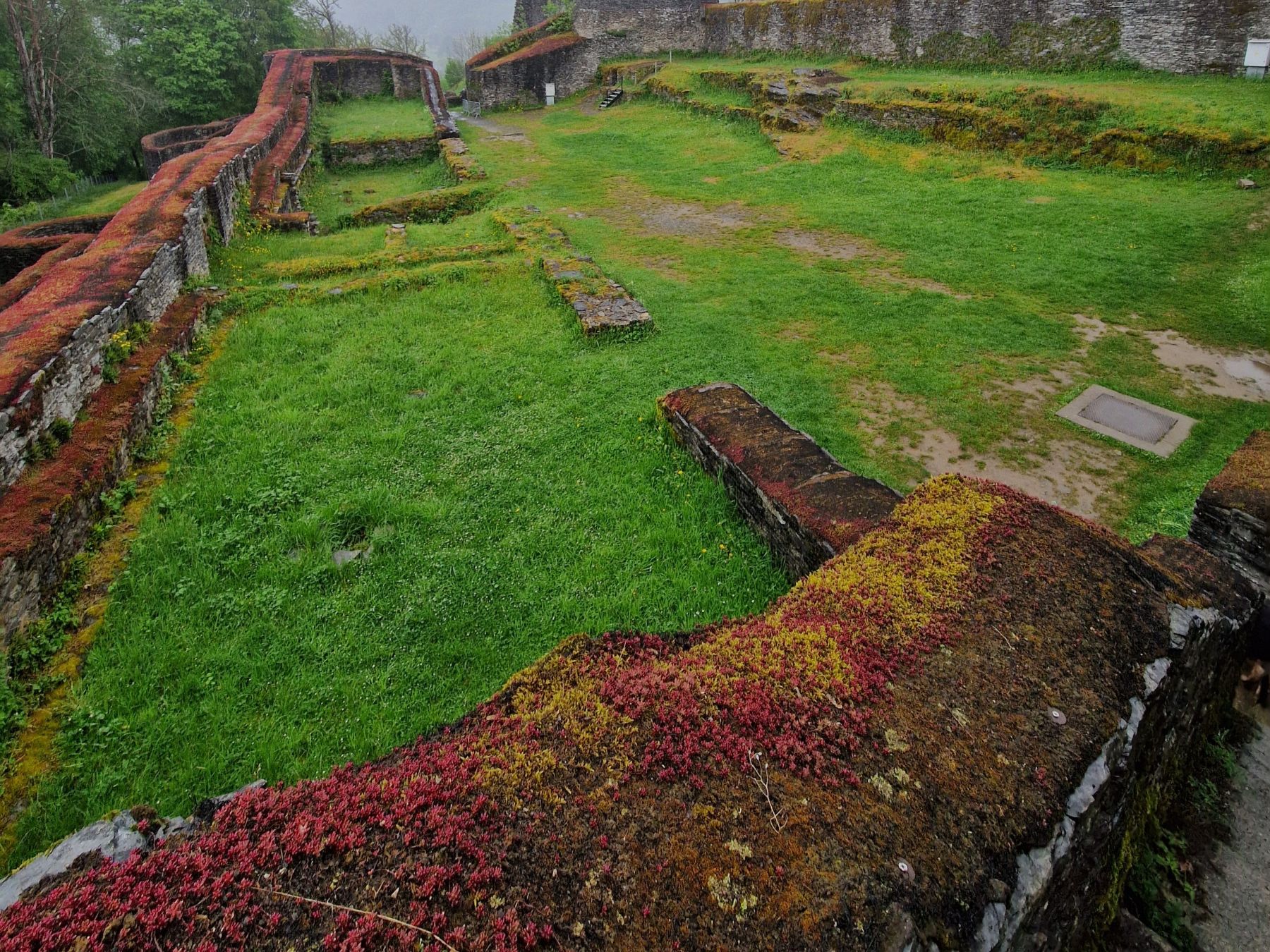
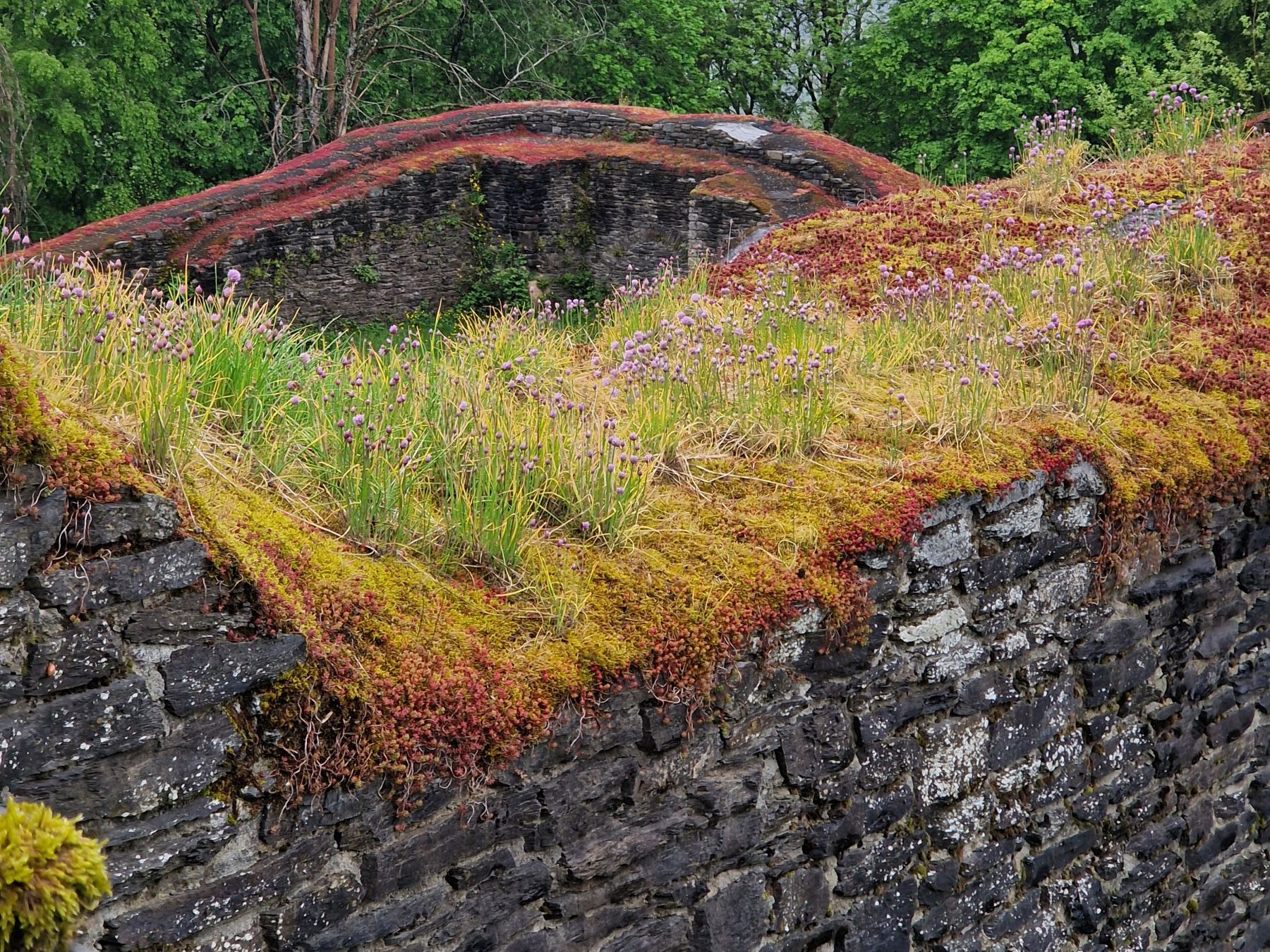
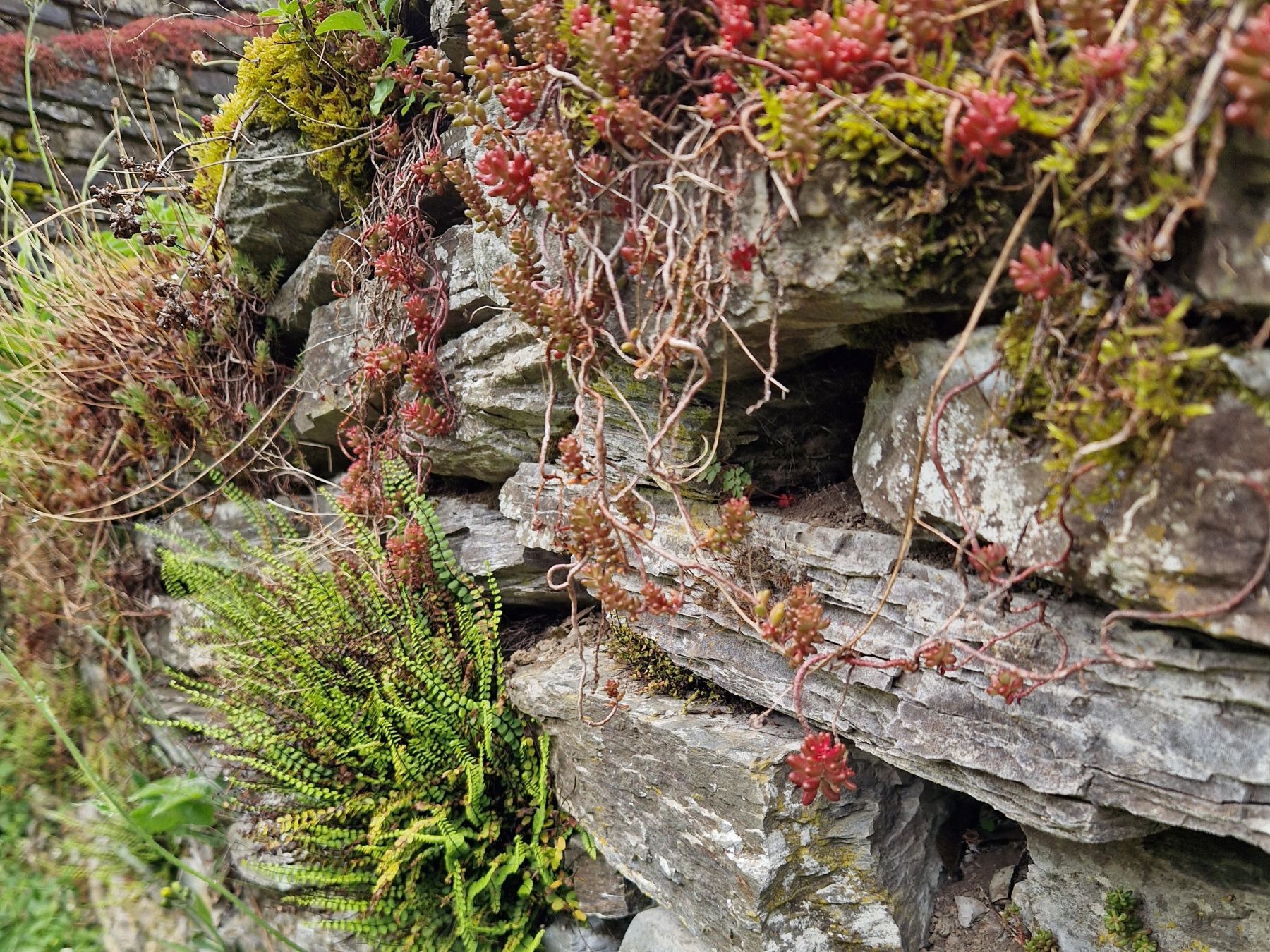
On south- and west-facing walls, you will find the true sun lovers: drought-tolerant species such as sedums, succulent plants that are also widely used on green roofs. Biting stonecrop, reflexed stonecrop, and white stonecrop survive in extremely dry conditions and can form beautiful living carpets. Yellow corydalis and wallflower are also real eye-catchers. Aromatic herbs such as thyme and oregano thrive there as well.
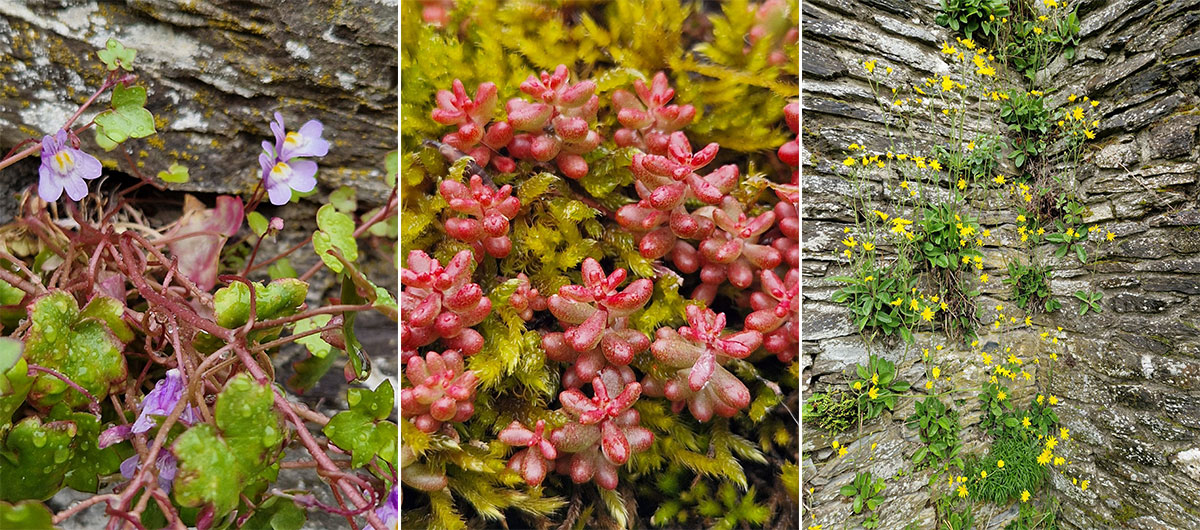
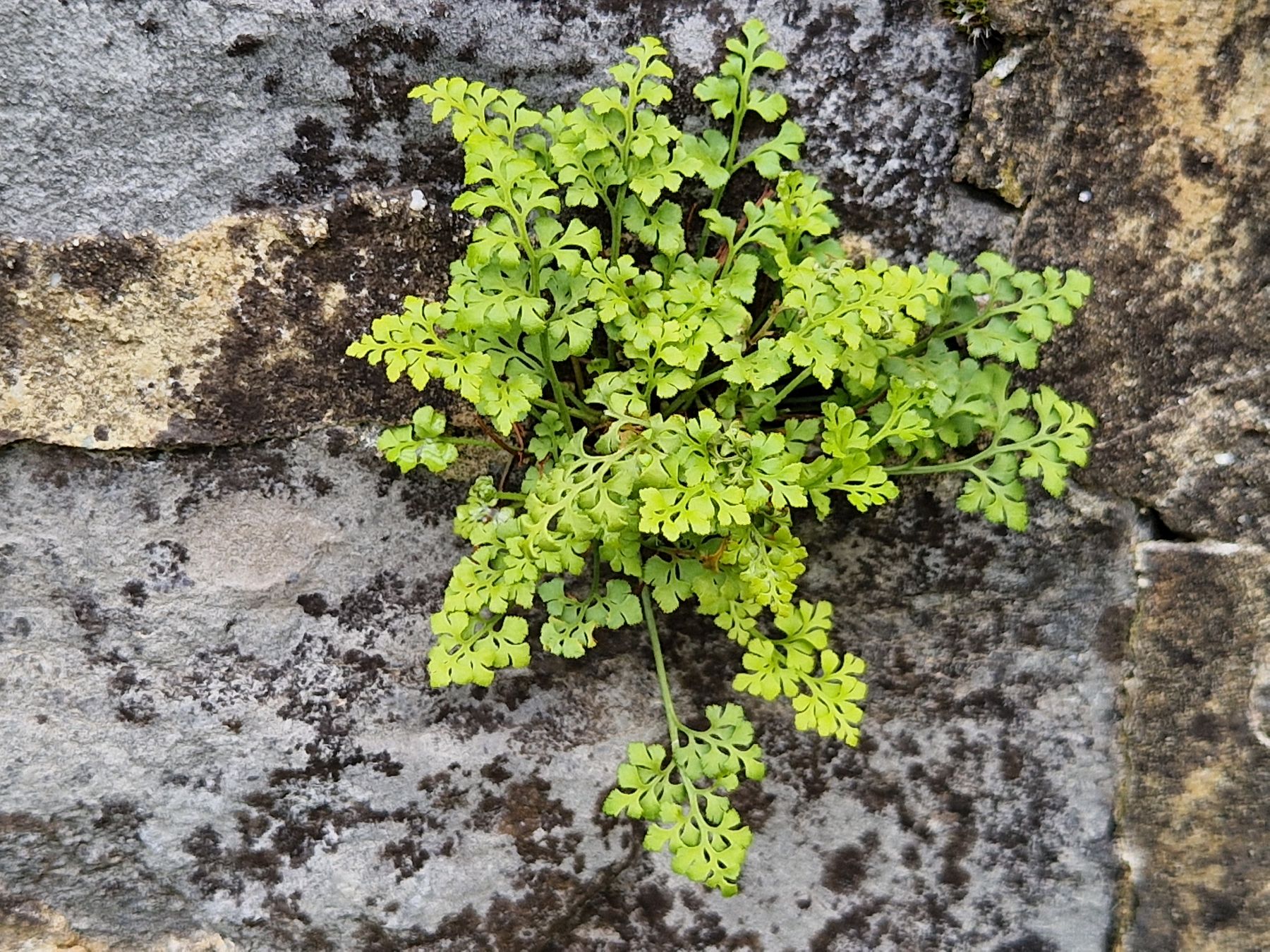
If your wall faces north or east, conditions tend to be cooler and more humid. There you will often find the delicate ivy-leaved toadflax, along with ferns such as hart’s-tongue fern, wall-rue, or maidenhair spleenwort.
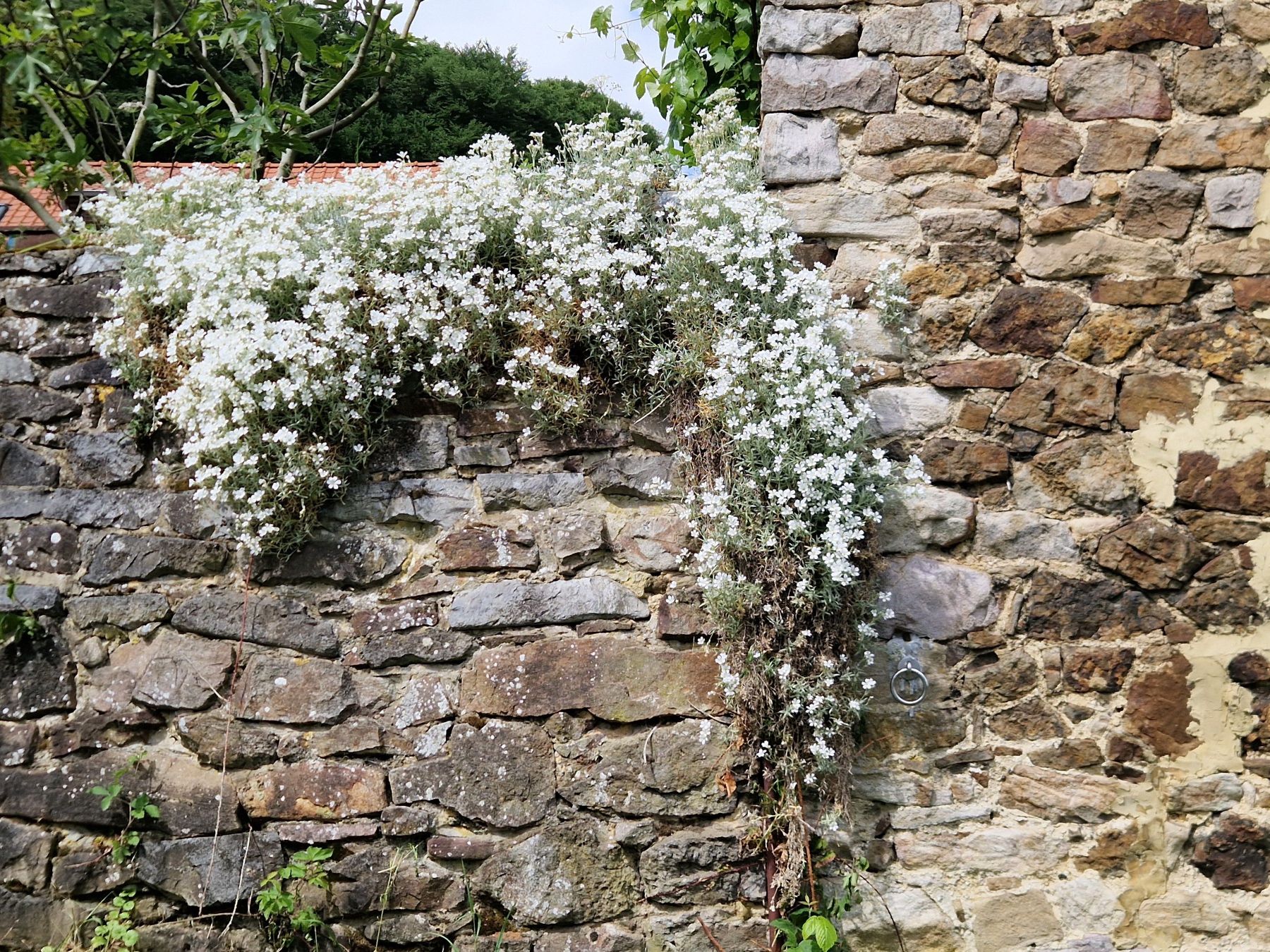
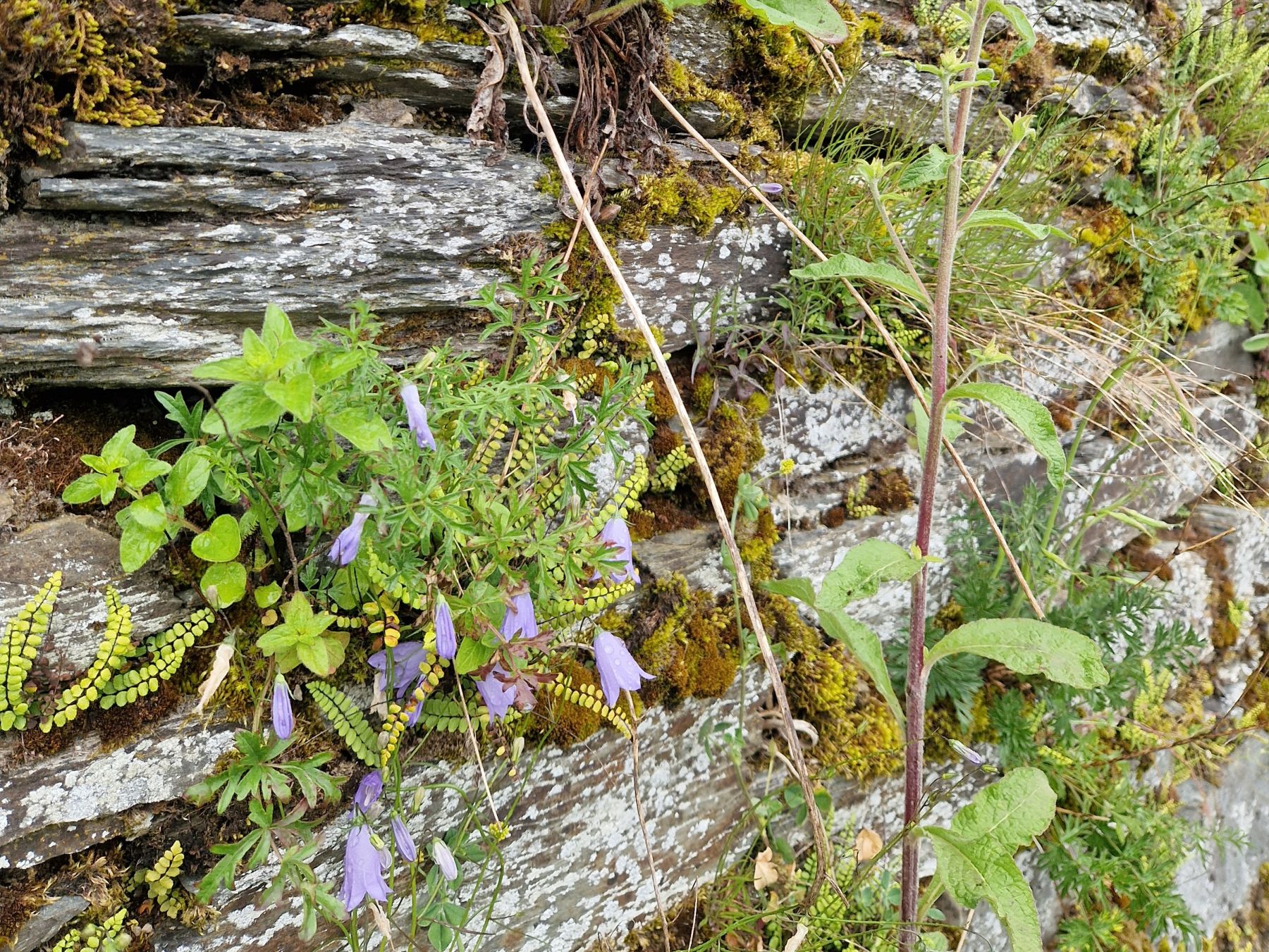
Alongside these native species, several naturalised exotics have also made themselves at home on walls, such as Mexican fleabane and red valerian. Sometimes entire walls are covered with a white veil of snow-in-summer or with the purple flowers of trailing bellflower. A truly beautiful sight.
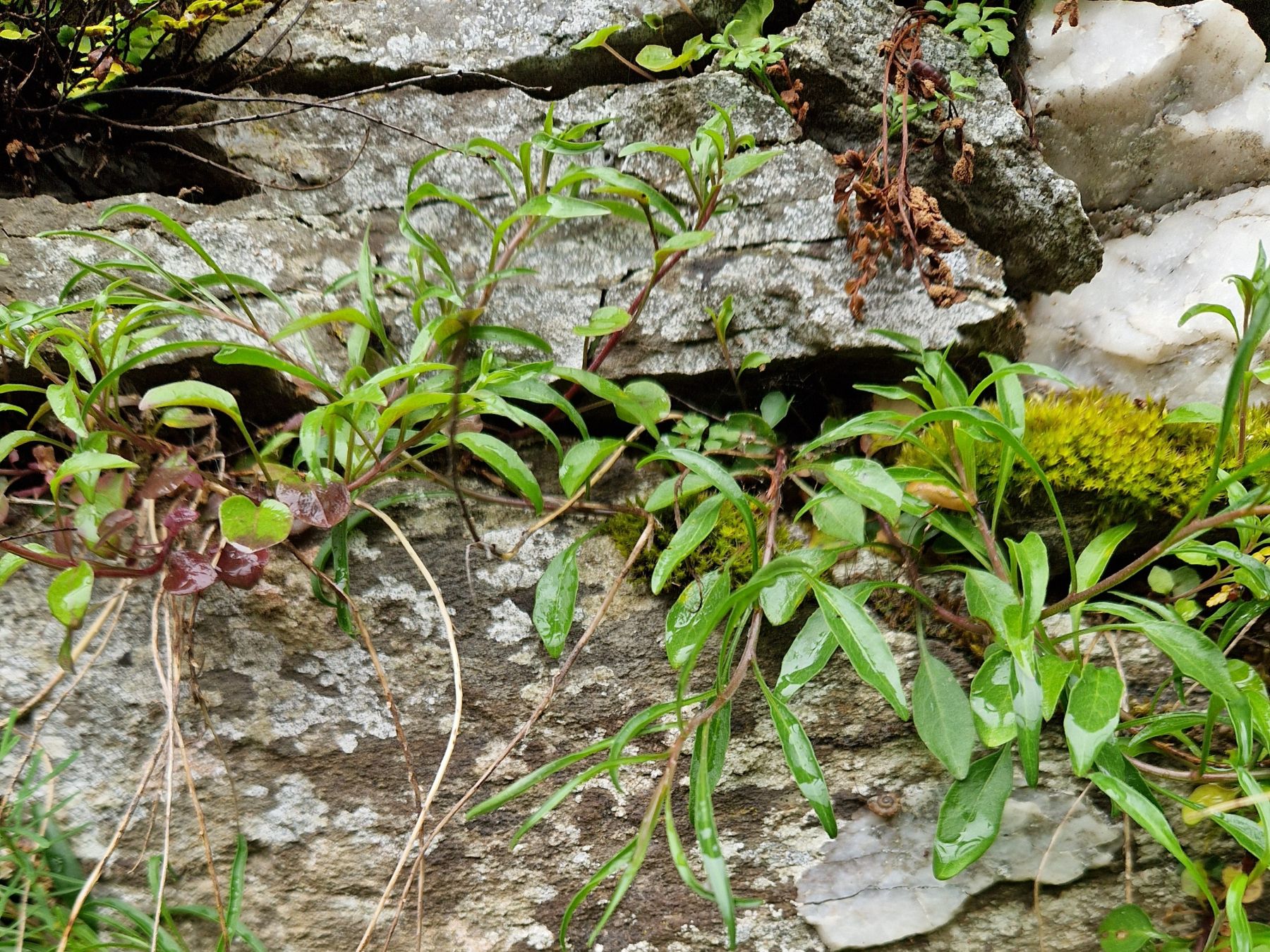
Besides these true wall specialists, all kinds of pioneers and opportunists also appear: ivy, mosses, lichens, larger ferns, greater celandine, and even seedlings of birch, elder, butterfly bush, and sometimes willow.
I find wall flora fascinating. Unfortunately, our garden did not contain any old walls or stone paths. So I started creating my own small stone biotopes using a large pile of cobblestones. Over the years, this led to our “cumbaya” seating area, an aromatic herb spiral, a dry stone wall, and more recently two “tumuli” — a grand word for a simple pile of stones. To my surprise, several wall species established themselves very well in our stony border. Even a small urban front garden with lots of rubble in the soil can offer opportunities for wall flora.
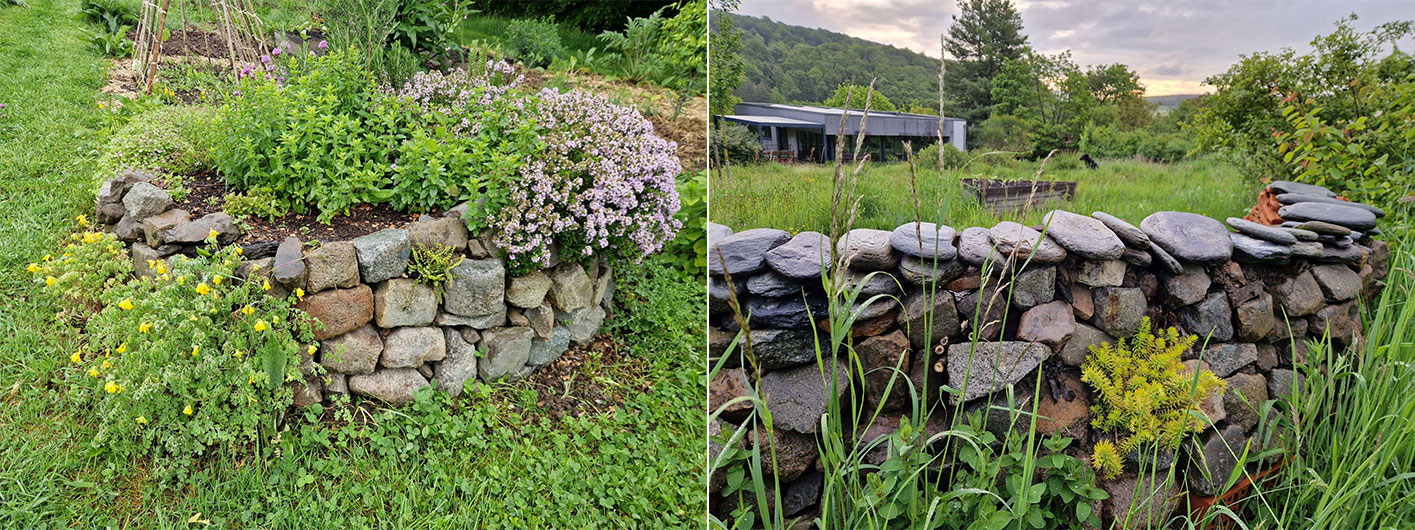
Wall flora may arrive spontaneously if source populations exist nearby. Otherwise, it is best to plant directly while building the wall, or to sow species yourself. It is important to use a low-humus substrate: a mix of sand, rubble, clay, and possibly a little well-decomposed leaf compost. Peat or fresh compost are less suitable because they dry out too quickly. Sometimes I also add crushed eggshells to increase the lime content.
From experience, I know how important it is that plants maintain contact with moist soil; otherwise they dry out rapidly. This works best with retaining walls or double walls containing enough substrate. In the beginning, watering is important to stimulate root growth. Once established, the plants often spread naturally through seeds or runners.
In Belgium, natural rocky habitats are limited to a few cliffs and rocky outcrops in Wallonia. This makes old stone walls and structures all the more valuable, especially in heavily paved urban environments. Wall flora invites us to look differently at spontaneous nature. No vast nature reserve. No spectacular landscaping. And yet immensely valuable. Wall flora beautifully demonstrates how nature returns spontaneously as soon as a little space is given back to it.
Wall flora is not only beautiful, it also increases biodiversity. Flowering wall plants attract numerous pollinators with their nectar and pollen, including wild bees, hoverflies, and butterflies. Crevices provide nesting places for insects and shelter or overwintering sites for spiders, beetles, snails, wall lizards, and toads. What at first glance appears barren and stony often turns out to be a surprisingly rich living world for plants, insects, and small animals. An old wall can become a miniature ecosystem, even in the middle of a city, where every patch of greenery matters.
So next time you visit an old castle, wander through a cemetery, or walk along ancient city walls, take a moment to look closely at the wall flora. It is a fascinating habitat full of life. Nature does not always have to be grand. Sometimes it simply begins in a tiny crack between two stones.
Wall flora is selective. Young concrete walls host very few species, while natural stone or brick walls with lime-rich joints are more densely vegetated. The older the wall, the more species settle, succeed one another, and coexist — and the more ecologically valuable the wall becomes.
Among people, a “wallflower” is someone who prefers to stay in the background. The strength of wall flora lies precisely in that modesty: a thin line of green between the stones. Yet this discreet vegetation hides an astonishing richness of species. Let us introduce you to some of them.
On south- and west-facing walls, you will find the true sun lovers: drought-tolerant species such as sedums, succulent plants that are also widely used on green roofs. Biting stonecrop, reflexed stonecrop, and white stonecrop survive in extremely dry conditions and can form beautiful living carpets. Yellow corydalis and wallflower are also real eye-catchers. Aromatic herbs such as thyme and oregano thrive there as well.
If your wall faces north or east, conditions tend to be cooler and more humid. There you will often find the delicate ivy-leaved toadflax, along with ferns such as hart’s-tongue fern, wall-rue, or maidenhair spleenwort.
Alongside these native species, several naturalised exotics have also made themselves at home on walls, such as Mexican fleabane and red valerian. Sometimes entire walls are covered with a white veil of snow-in-summer or with the purple flowers of trailing bellflower. A truly beautiful sight.
Besides these true wall specialists, all kinds of pioneers and opportunists also appear: ivy, mosses, lichens, larger ferns, greater celandine, and even seedlings of birch, elder, butterfly bush, and sometimes willow.
I find wall flora fascinating. Unfortunately, our garden did not contain any old walls or stone paths. So I started creating my own small stone biotopes using a large pile of cobblestones. Over the years, this led to our “cumbaya” seating area, an aromatic herb spiral, a dry stone wall, and more recently two “tumuli” — a grand word for a simple pile of stones. To my surprise, several wall species established themselves very well in our stony border. Even a small urban front garden with lots of rubble in the soil can offer opportunities for wall flora.
Wall flora may arrive spontaneously if source populations exist nearby. Otherwise, it is best to plant directly while building the wall, or to sow species yourself. It is important to use a low-humus substrate: a mix of sand, rubble, clay, and possibly a little well-decomposed leaf compost. Peat or fresh compost are less suitable because they dry out too quickly. Sometimes I also add crushed eggshells to increase the lime content.
From experience, I know how important it is that plants maintain contact with moist soil; otherwise they dry out rapidly. This works best with retaining walls or double walls containing enough substrate. In the beginning, watering is important to stimulate root growth. Once established, the plants often spread naturally through seeds or runners.
In Belgium, natural rocky habitats are limited to a few cliffs and rocky outcrops in Wallonia. This makes old stone walls and structures all the more valuable, especially in heavily paved urban environments. Wall flora invites us to look differently at spontaneous nature. No vast nature reserve. No spectacular landscaping. And yet immensely valuable. Wall flora beautifully demonstrates how nature returns spontaneously as soon as a little space is given back to it.
Wall flora is not only beautiful, it also increases biodiversity. Flowering wall plants attract numerous pollinators with their nectar and pollen, including wild bees, hoverflies, and butterflies. Crevices provide nesting places for insects and shelter or overwintering sites for spiders, beetles, snails, wall lizards, and toads. What at first glance appears barren and stony often turns out to be a surprisingly rich living world for plants, insects, and small animals. An old wall can become a miniature ecosystem, even in the middle of a city, where every patch of greenery matters.
So next time you visit an old castle, wander through a cemetery, or walk along ancient city walls, take a moment to look closely at the wall flora. It is a fascinating habitat full of life. Nature does not always have to be grand. Sometimes it simply begins in a tiny crack between two stones.
Comments
- Dit vind ik heel leuk. Ik ben van plan dit te maken. Leem is moeilijk te vinden. Hoe kan ik dit vervangen a.u.b.? (Mieke)
- Dank je Mieke, je kan het ook zonder leem doen, gewoon met puin, bladaarde en zand. Leem helpt om vochtig te houden en voor de samenhang van substraat maar je kan ook zonder of eventueel met beetje klei maar dan best niet té voedselrijk. Veel plezier ermee! (An (IMBY))
Add a comment